
The bird came first.
The formulation followed.
Before the ingredients.
Before the bowl.
Before deciding what should go into a food, there was a more important question to answer:
What does this bird actually need?
That question shaped Nature’s Nest’s approach to companion bird nutrition, from understanding the animal to formulating its food.
A companion worth understanding.
You know the routines.
The preferences.
The very definite opinions about the bowl.
Your bird is an individual, with a personality and a place in your household.
It also has a body with nutritional needs you cannot always see.
Its size, beak, activity, behaviour and environment all matter.
So does the way it investigates, handles and chooses its food.
Knowing what a bird will eat is a starting point.
Understanding what its body needs takes us further.
For a companion that depends on your choices, that understanding is worth the care.
Beneath the feathers.
Feathers, body condition and activity are things we notice.
Nutrition also supports quieter work: muscle and tissue maintenance, bone health, digestion, energy metabolism and normal immune and organ function.
Growth, maintenance and repair continue throughout daily life, even when a bird appears to be sitting quietly.
That work requires protein and essential amino acids, fats, vitamins, minerals and trace elements, energy, fibre and water.
Their amounts matter.
So do their relationships.
Understanding nutrition means considering these needs together.
Feeding is part of living.
Birds investigate, manipulate, choose and forage.
Feeding offers opportunities for exploration and engagement alongside its nutritional role.
Age, moult, body condition, illness, recovery and environment can also change what a bird needs.
Sometimes the response involves nutrition; sometimes husbandry, enrichment or veterinary care.
Understanding the whole bird means recognising the difference.
Bringing the needs together.
Formulation is the work of providing nutritional requirements together, in the right amounts and relationships.
Nature’s Nest core diets were formulated by veterinarians, with avian biology as the starting point.
The bird’s requirements guide the nutritional balance.
That balance guides the ingredient choices.
A reason for every ingredient.
Each ingredient is selected for the job it performs within the formulation.
An ingredient list tells you what is present.
The formulation explains why it is there and how it contributes to the food as a whole.
This is where the nutritional thinking becomes a practical responsibility.
You should not need to calculate amino acids, mineral relationships or vitamin requirements at the kitchen counter.
That is our work, before you open the bag.
From formulation to food.
The selected ingredients are combined into one formulated mixture.
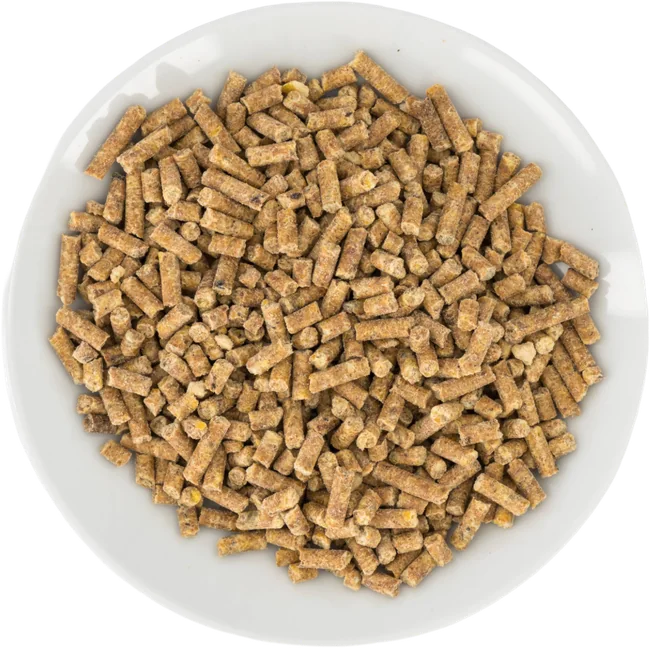
Nature’s Nest then extrudes that mixture into pellets, giving the formulation a consistent physical form.
This matters because birds can select favourites and leave other pieces behind.
What enters the bowl and what reaches the bird can differ.
A pellet brings the formulated ingredients together in one food.
The nutritional components have been considered together before the first bite.
Made for the bird eating it.
Delivery also means paying attention to the bird at the other end.
Size matters.
Texture matters.
The way a bird handles food matters.
Some birds enjoy variety and opportunities to explore.
Smaller beaks may need a finer texture.
These differences shape how the food is offered and how the bird accesses it.
The next step is to find a suitable form for your bird.
One foundation.
Four core foods.
Our core foods share the same nutritional foundation, offered in different forms and with different things to explore.
Start with the differences in the bowl: a consistent pellet, added variety, more texture or a softer meal.
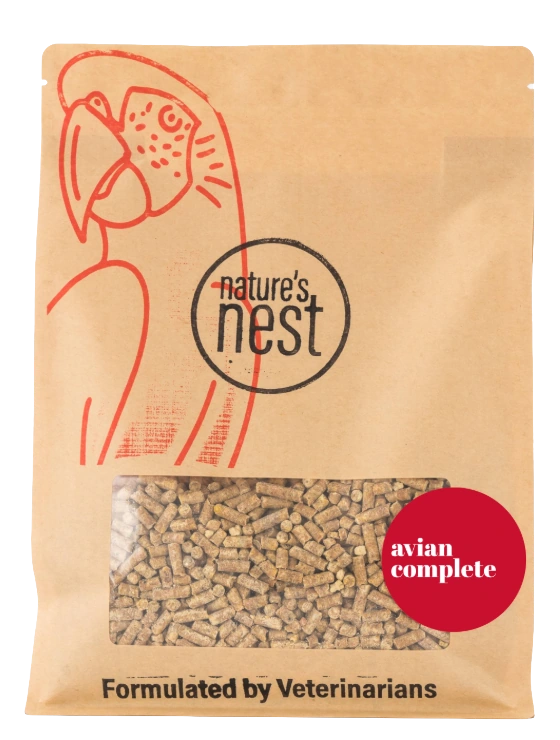
Avian Complete
The complete pellet.A complete, vet-formulated pellet that brings the nutritional building blocks of the daily core diet into one consistent food.
Avian Complete is the pellet foundation on which the core range is built.
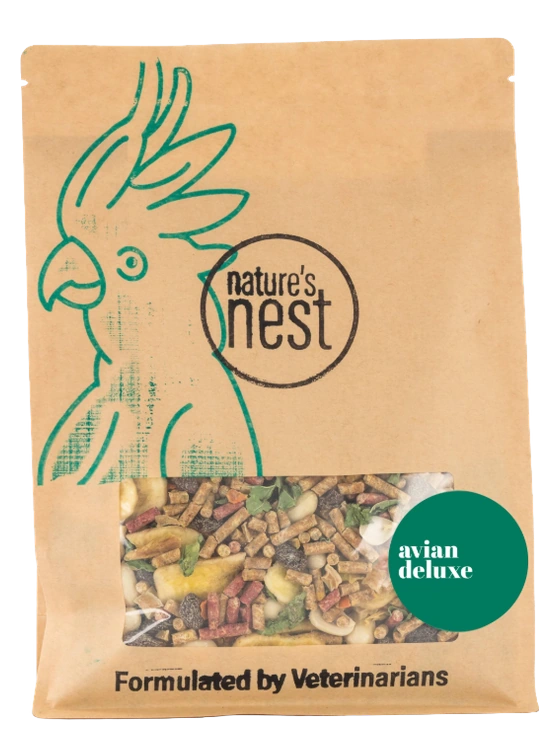
Avian Deluxe
More variety to explore.The complete pellet foundation with dried banana, raisins, mixed vegetables, blanched peanuts, and maize and beetroot sticks.
The additions bring variety and feeding interest.
The nutritional foundation remains in the pellet.
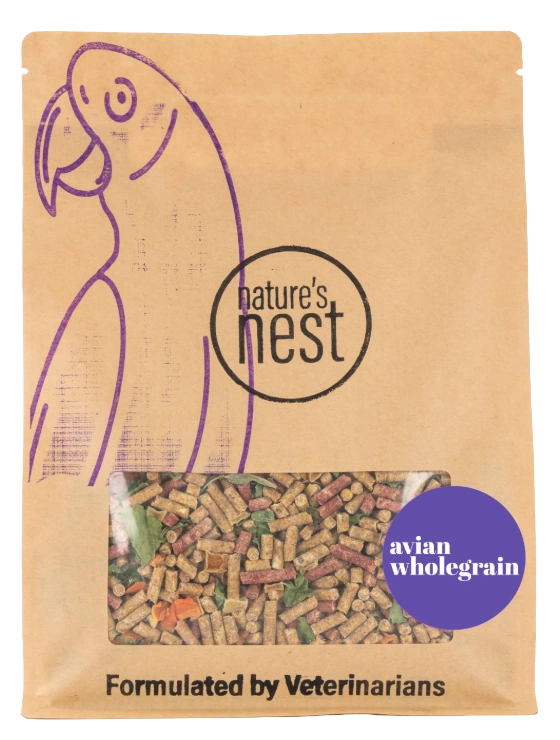
Avian Wholegrain
Texture and feeding interest.The shared nutritional foundation with mixed vegetables and maize and beetroot sticks.
Wholegrain offers texture, colour and different elements for the bird to investigate in the bowl.
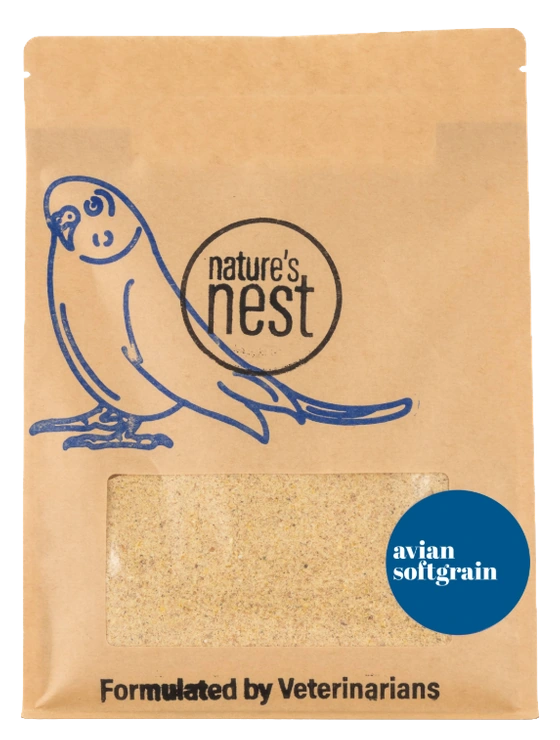
Avian Softgrain
A softer meal for smaller beaks.The complete nutritional formulation, milled into a softer meal texture.
Designed with smaller beaks in mind, including budgies and finches, Softgrain offers a finer physical form.
Find a starting point for your bird.
Use the feeding guide to select your bird and explore a suitable option for its feeding preferences.
A bird’s health is shaped by its biology, environment, daily care, enrichment and veterinary support.
Nutrition is one part of that picture, and a part we can think about carefully.
Because when a bird is part of the family, what goes into its bowl deserves thought.
The bird came first.
The formulation followed.